

👋 Hey, Carlos here! Welcome to “The Holistic Leader”, your weekly source of simple and honest leadership, Agile, Management & team insights.
Why the best leaders know when to push, when to listen, and when to get out of the way.
You can’t push people to do their best by making them feel like they’re never good enough.
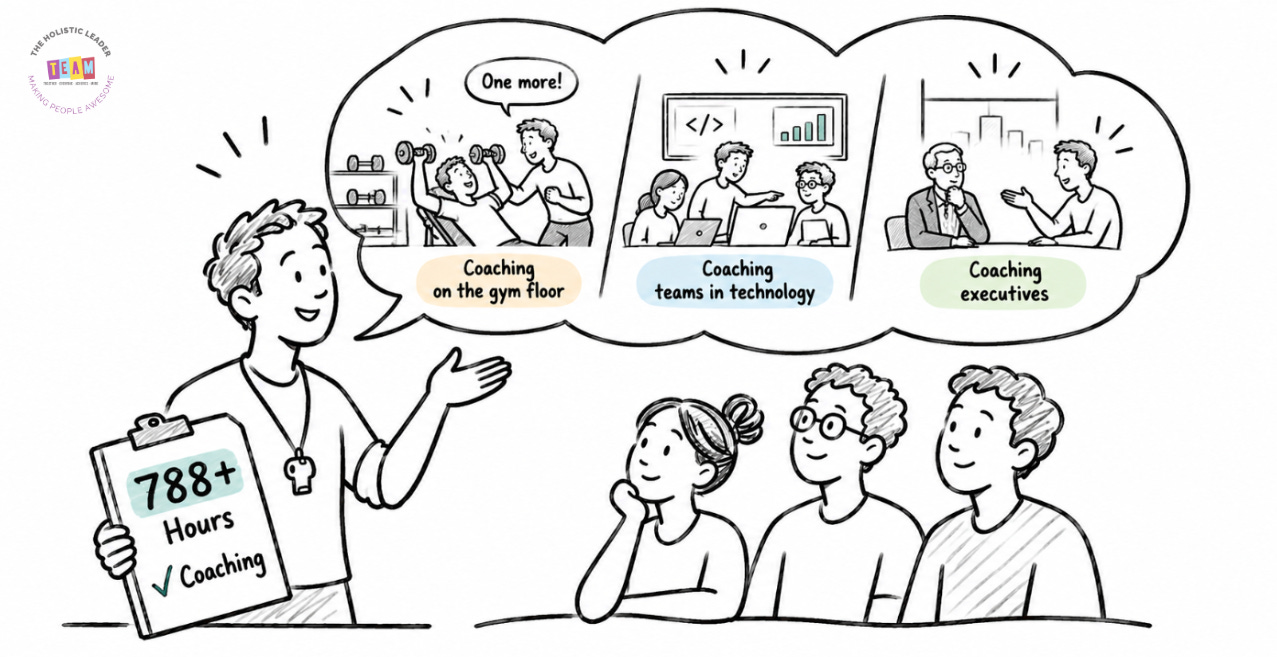
Over the past few months, I’ve spent 143 hours coaching professionals in a corporate setting, bringing my total to more than 788 hours of Professional coaching experience in different settings.
Different people. Different goals. Different lives.
Some want to get stronger. Some want to feel better. Others are trying to build habits while dealing with long workdays, stress, and everything life throws at them.
But after hundreds of hours of coaching, one thing keeps coming back to me.
People don’t always need more pressure. Sometimes, they need someone to understand what’s holding them back.
And the more I think about it, the more I see the same challenge in leadership.
The problem with telling people to work harder
Imagine someone walks into a training session after a long day.
They’re tired. Their mind is somewhere else. Even the warm-up feels hard.
I could tell them to push harder.
After all, they came to train, right?
But what if they slept four hours last night? What if they’ve been dealing with stress at work? What if they’re already giving everything they have just to show up?
Pushing harder might not be the answer that day.
Now think about a software team that’s falling behind.
The deadline is getting closer. The manager is worried. Everyone is busy.
So what happens?
More meetings. More updates. More pressure.
And, of course, someone says:
“We need everyone to give 110%.”
As if the team had been saving that extra 10% for a special occasion.
I’ve worked with teams in technology, and I’ve seen how easy it is to confuse being busy with making progress.
Sometimes, the problem isn’t how hard people are working.
It’s unclear goals, too many tasks, or decisions that keep changing.
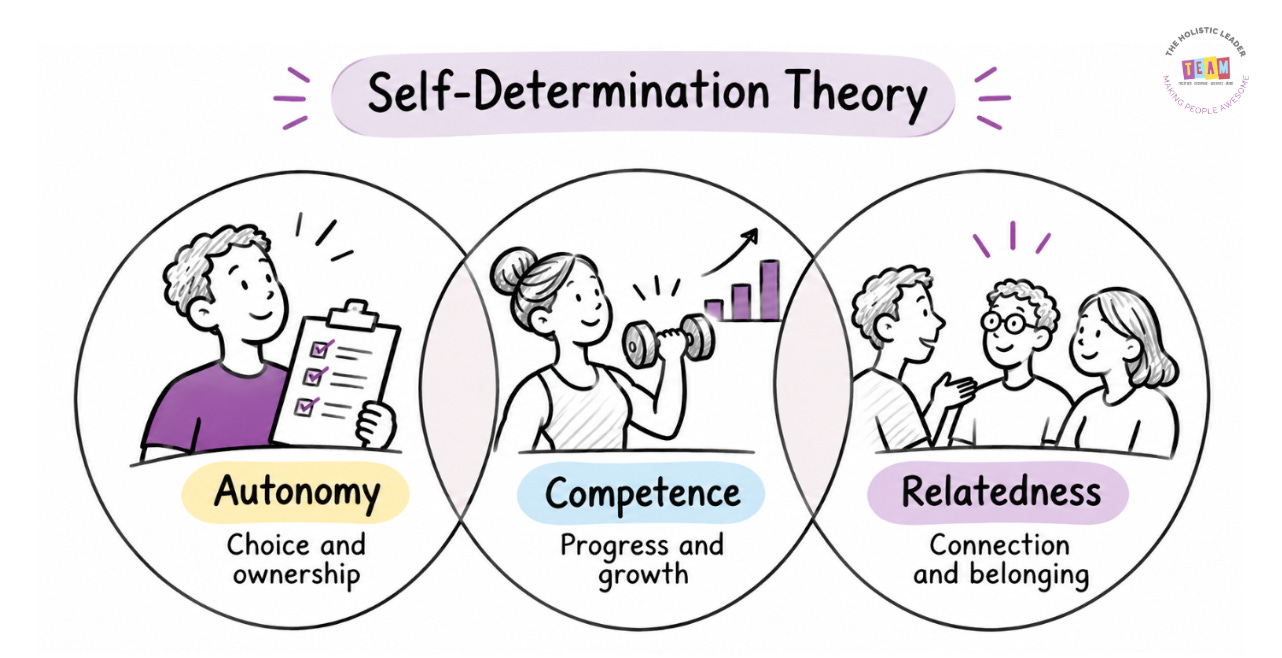
This connects with Self-Determination Theory, developed by psychologists Edward Deci and Richard Ryan.
Their research highlights three important psychological needs:
Autonomy: Feeling that you have some choice and control over your actions.
Competence: Feeling capable and seeing yourself improve.
Relatedness: Feeling connected to and valued by others.
When these needs are supported, people are more likely to develop stronger, more lasting motivation.
When they’re neglected, adding pressure may produce short-term results without addressing the real problem.
A good coach doesn’t just ask for more effort. They look at what will help someone improve.
Good leaders should do the same.
Not everyone needs the same kind of coaching
Here’s something I learned early in coaching.
You can’t coach everyone the same way.
Someone who is learning to lift weights for the first time needs clear steps, close support, and time to build confidence.
Someone who has trained for years may need a challenge, honest feedback, and the freedom to make their own choices.
Give both people the exact same approach, and one of them will likely struggle.
Now imagine a new employee joining a team.
They don’t know the systems, the people, or how decisions are made.
They ask questions because they’re learning.
But their manager expects them to work independently from day one.
A few months later, that same employee knows the job well. Yet the manager still checks every small detail and tells them how to do everything.
In the first case, the person needed more support.
In the second, they needed more trust.
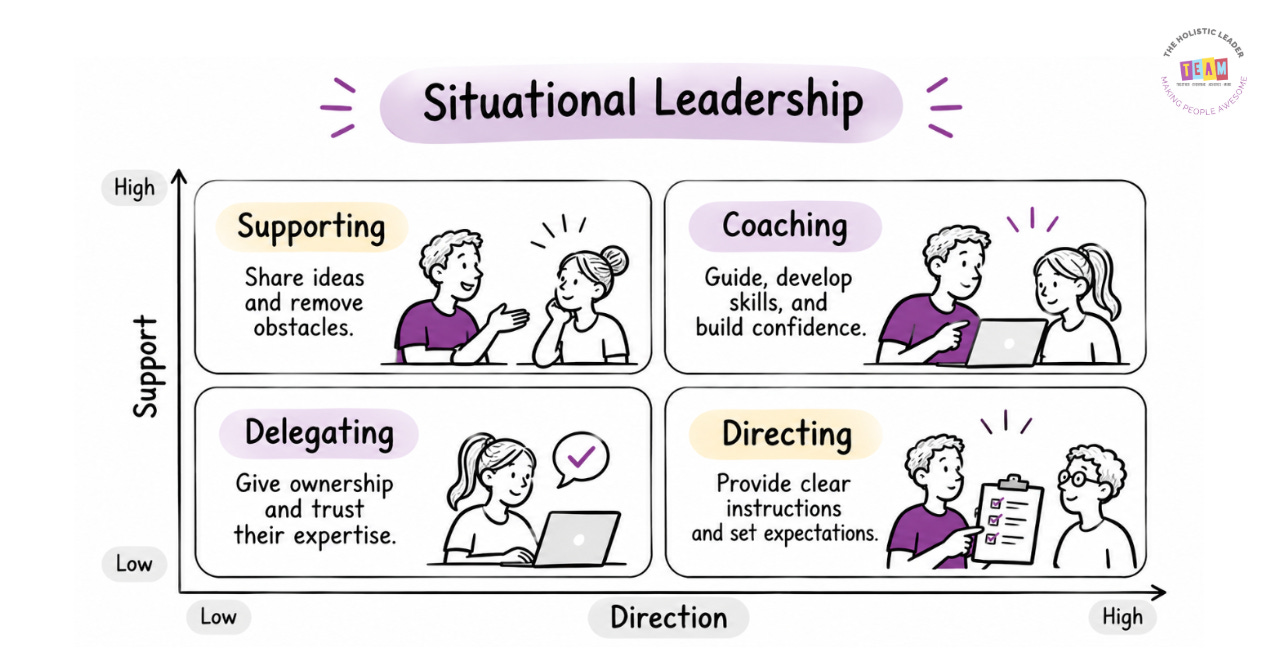
This is the idea behind Situational Leadership, a model developed by Paul Hersey and Ken Blanchard.
The idea is simple: how you lead should change based on what someone needs for a specific task.
The model describes four approaches:
Directing: Give clear instructions when someone is learning.
Coaching: Provide guidance, encouragement, and feedback.
Supporting: Listen, involve people in decisions, and build confidence.
Delegating: Give capable people the freedom to take ownership.
That sounds easy.
But how many managers change their approach as their people grow?
How many keep treating experienced team members like beginners?
And how many expect new employees to know things nobody has taught them?
The support that helps someone grow today might be the very thing holding them back tomorrow.
Good coaching means paying attention to that change.
So does good leadership.
People won’t speak up if they’re afraid of being wrong
Imagine a nurse notices something that doesn’t look right during a shift.
Or a developer sees a problem in a new software release.
Or a junior employee has an idea that could save the team hours of work.
What happens next depends a lot on the people around them.
Do they speak up?
Or do they stay quiet because they don’t want to look foolish, upset their manager, or be blamed?
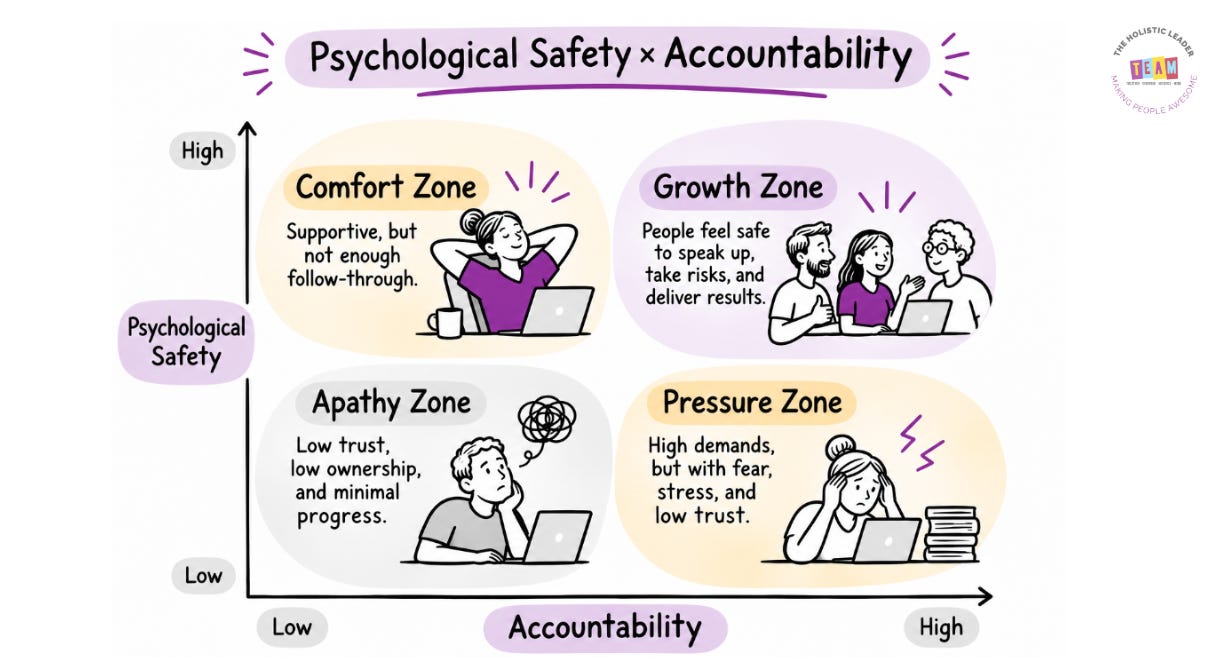
Harvard researcher Amy Edmondson calls this psychological safety.
It’s the belief that people can ask questions, share concerns, and admit mistakes without being punished or embarrassed for speaking up.
It doesn’t mean people can do whatever they want.
It doesn’t mean lowering standards.
It means making it safe to be honest.
I’ve noticed something similar in coaching.
When someone feels comfortable telling me that an exercise hurts, that they don’t understand something, or that they struggled with their plan, I can actually help them.
But if they feel judged, they may simply tell me what they think I want to hear.
And then we’re both working with the wrong information.
Think about that in a workplace.
If your team is afraid to tell you the truth, how can you make good decisions?
A manager may think everything is going well because nobody is raising concerns.
But silence doesn’t always mean agreement.
Sometimes, it means people have learned that speaking up isn’t worth the risk.
And that’s a much bigger problem than one missed deadline.
High standards and empathy can work together
There’s something else I don’t want to leave out.
Coaching isn’t about being nice all the time.
Sometimes, I have to challenge someone.
Sometimes, I have to tell them they’re capable of more.
And sometimes, I have to have a conversation they might not enjoy.
The same is true in leadership.
A manager still needs to set goals, give feedback, make hard decisions, and hold people accountable.
But there’s a difference between challenging someone and making them feel small.
Think about a sales team that misses its monthly target.
One manager calls everyone into a meeting and asks why they failed.
Another looks at the results with the team, talks about what didn’t work, and helps them prepare for the next month.
Both managers care about performance.
But the way they respond can shape what happens next.
The second approach doesn’t promise better results every time.
It does create more room for people to learn, take responsibility, and improve.
Accountability should help people move forward, not leave them afraid to make the next mistake.
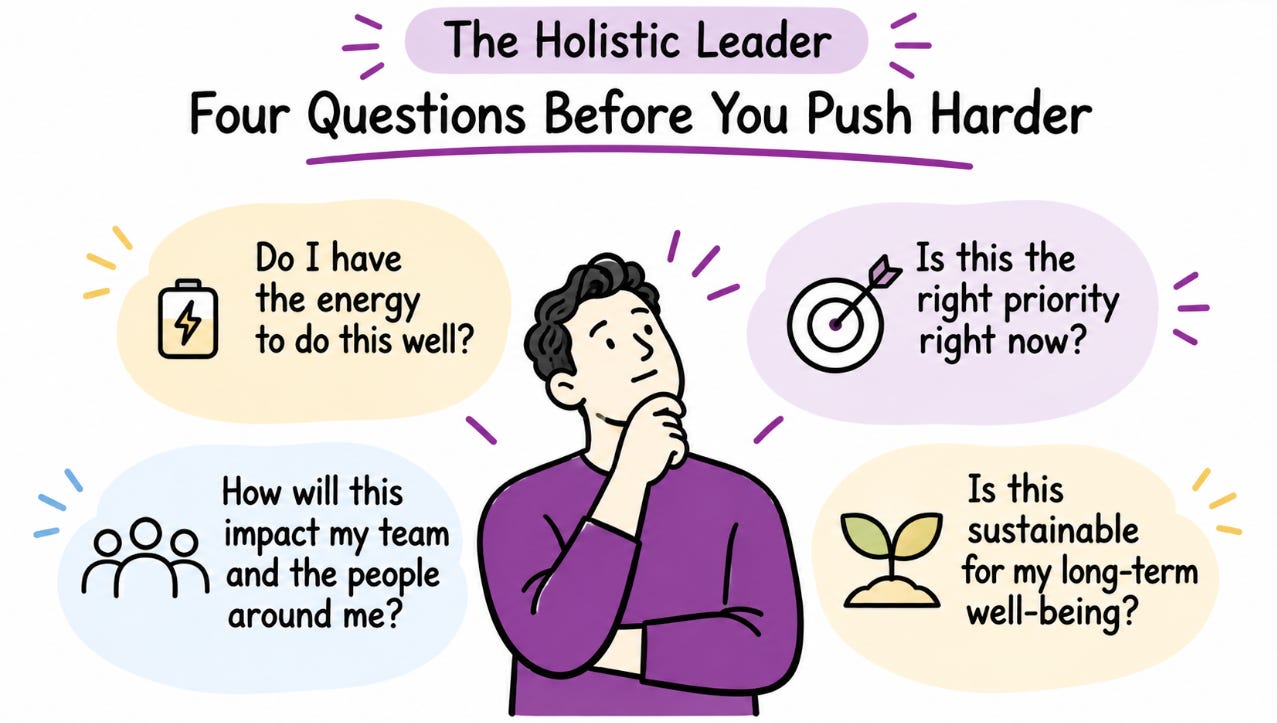
Before you push harder, ask these four questions
The next time someone on your team is struggling, consider these questions before asking for more effort.
1. Is the goal clear?
Does the person know what success looks like, or are they trying to meet expectations that keep changing?
2. Do they have the capacity?
Is the workload realistic? Do they have the time, tools, and resources they need?
3. What support do they need?
Would clear direction help? More coaching? Encouragement? Or simply the freedom to make their own decisions?
4. Can they tell me the truth?
Would they feel comfortable admitting they’re struggling, questioning a decision, or telling me something isn’t working?
These questions won’t solve every leadership problem.
But they may help you understand the problem before trying to fix it.
What 788+ hours have really taught me
I started this reflection thinking about the people I’ve coached.
But the more I wrote, the more I realized this isn’t only about coaching.
It’s about how we treat people when we’re responsible for helping them grow.
In fitness, we talk about training, rest, and progress.
In technology, we talk about delivery, teamwork, and change.
In business, we talk about targets, results, and performance.
Different words. Different workplaces.
But behind all of them are people.
People who have good days and bad days.
People who want to do well but don’t always know how.
People who need direction at one point and freedom at another.
And people who may be capable of much more than their current work allows them to show.
After more than 788 hours of coaching, I still don’t have all the answers.
I don’t think any coach or leader ever will.
But I’ve learned to pay more attention to what people need, not just what I expect from them.
And perhaps that’s one of the hardest parts of leadership.
Knowing when to challenge someone.
When to listen.
When to offer support.
And when to step aside and let them grow.
Because the goal of a good coach isn’t to make someone depend on them forever. It’s to help them become more capable on their own.
I think the best leaders aim for the same thing.
Not just a team that meets its targets.
But a team that grows stronger, makes better decisions, and learns to succeed together.
And that starts with how we treat people.
P.S. If this article was useful, hit the ❤️ and share it with someone who needs it. You can also subscribe to The Holistic Leader to get more posts like this, every week.
Thanks for reading.
See you next week!
- Carlos