

In this issue:
The Promotion Trap Most Leaders Miss
Why Performance Is Not Readiness
The Readiness Gap Principle
How Leaders Accidentally Set People Up to Struggle
Better Questions Before Promoting Someone
Different Types of Growth Inside Teams
Leadership as Fit, Not Status
The Promotion Trap
A few years ago, I was leading several large projects at the same time.
Everything moved fast.
Deadlines, Reports, Presentations, Escalations.
I worked closely with a project coordinator who supported me across several projects.
She handled meeting notes, reports, presentations, metrics, scheduling, and follow-ups.
If something needed to get done quickly, she handled it.
She was organized, responsive, dependable, and always willing to help.
Honestly, she made my work significantly easier.
Then promotion season came around.
Her manager pulled me aside for a quick conversation and asked:
- “What do you think about promoting her this cycle?”
My first instinct was simple:
“Yes.”
Because from my experience, she was doing great work.
Reliable, Consistent, Trusted.
But the more I thought about it, the more uncomfortable I became.
Because the next role was completely different from the role she had now.
And I realized something important in that moment:
As leaders, our opinions in these conversations directly affect people’s careers.
If you say:
“She is not ready.”
That can impact confidence, visibility, and future opportunities.
But saying:
“Yes, promote her.”
Without understanding the full context can also create long-term damage.
That moment changed how I think about promotions.
Performance Is Not Readiness
One of the biggest mistakes organizations make is assuming that strong performance automatically means someone is ready for the next level.
But many roles require completely different skills.
Her current role was structured.
Clear tasks.
Clear expectations.
Clear deadlines.
The next role required:
more ambiguity
more independence
more difficult conversations
more stakeholder pressure
more emotional resilience
The skills that made her successful today were not necessarily the same skills needed tomorrow.
This is where many leaders get stuck.
We confuse:
reliability with readiness
effort with capacity
high support with high autonomy
Someone can be exceptional in one environment and still need development before stepping into another.
The Readiness Gap Principle
After that experience, I started thinking about promotions differently.
I now think about something I call:
The Readiness Gap Principle
The bigger the gap between someone’s current responsibilities and the emotional, strategic, and relational demands of the next role, the more support they need before promotion.
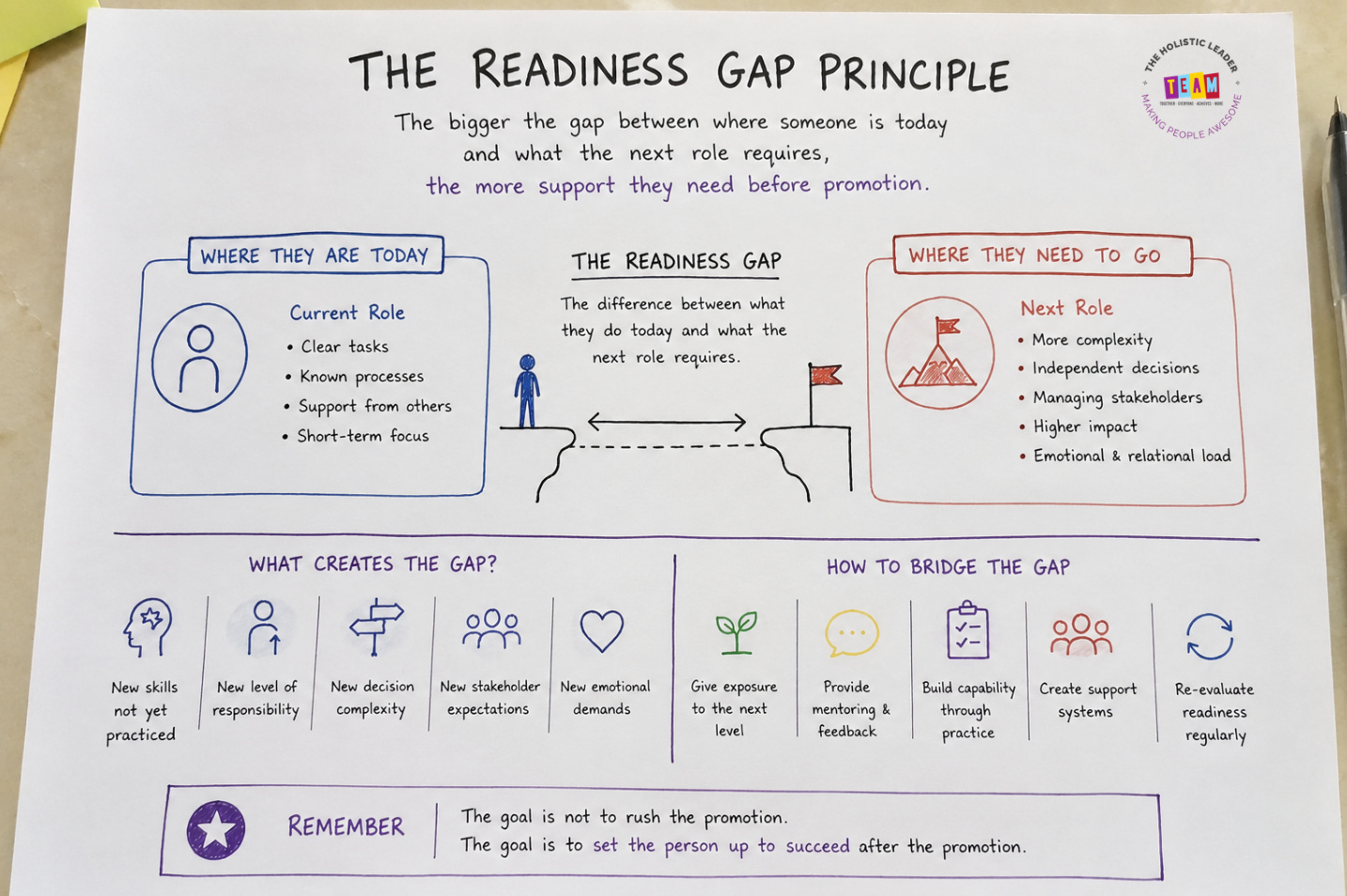
Most organizations only evaluate current performance.
But healthy leadership evaluates transition readiness.
That means asking:
Has this person practiced the skills required at the next level?
Have they handled ambiguity before?
Have they led difficult conversations?
Have they shown independent judgment under pressure?
Have they experienced the emotional weight of broader responsibility?
Readiness is not about intelligence.
It is about exposure, practice, and support.
The Real Role of Leadership
That experience also made me realize something else.
Many organizations only recognize one form of growth:
bigger title
bigger team
more authority
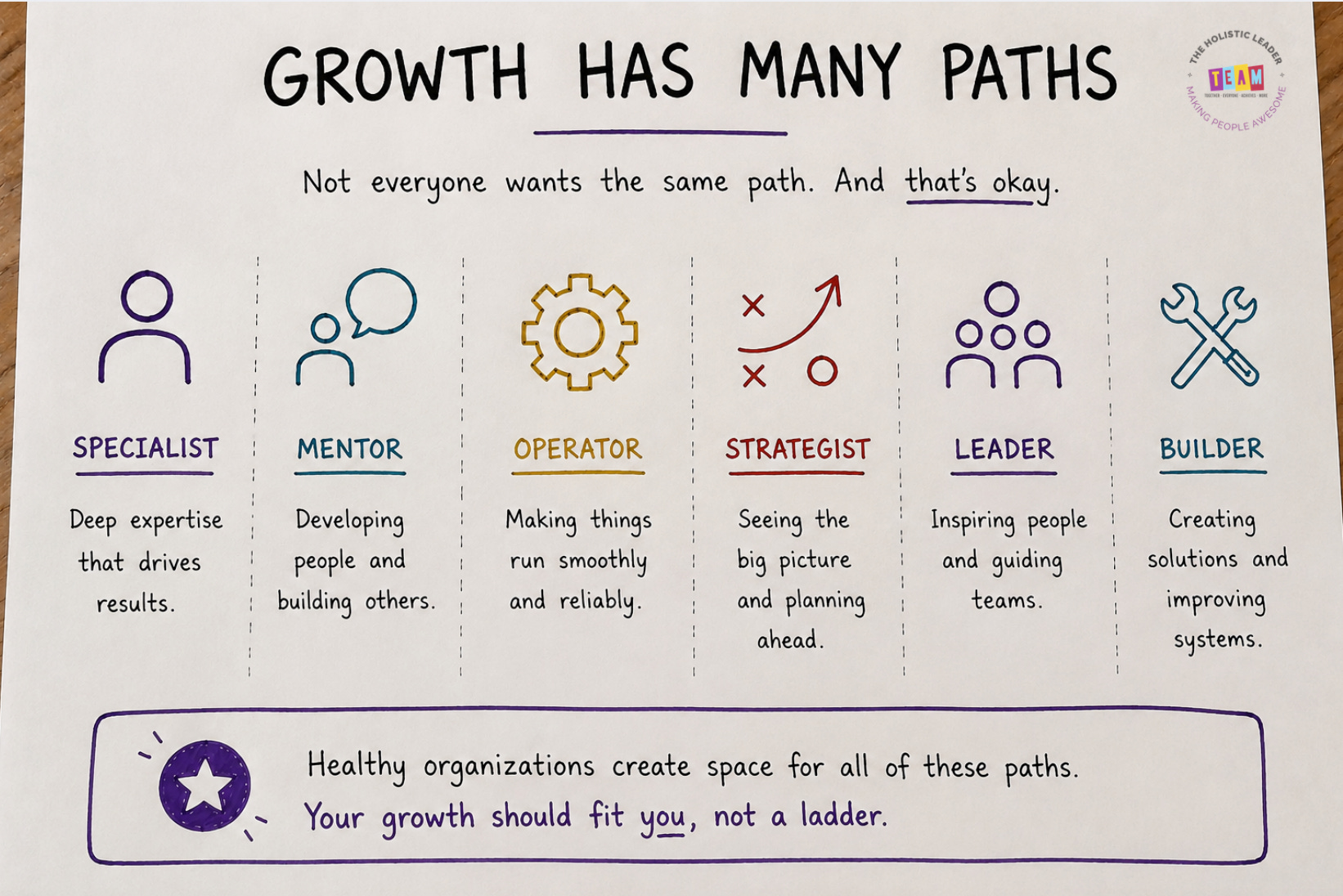
But leadership is not the only valuable path.
Some people thrive as builders.
Others as operators.
Others as mentors.
Others as specialists.
Others as stabilizers inside chaotic teams.
Not everyone wants to manage people.
And not everyone should.
Healthy organizations create multiple paths for growth instead of pushing everyone toward hierarchy.
Better Questions Before Promotion
Now, before supporting a promotion decision, I try to ask different questions.
Not:
“Do they deserve it?”
But:
What kind of work gives this person energy?
What pressure are they actually ready for?
What skills are still untested?
What support would help them succeed?
Does this next role truly fit who they are becoming?
Those questions create better leaders.
And they create healthier teams.
Leadership Is About Fit
Leadership is not a reward for loyalty, effort, or being dependable.
Leadership is a different responsibility.
And sometimes the best thing a leader can do is slow the process down long enough to make sure growth is actually aligned.
Not rushed.
Not assumed.
Not forced by the system.
Because real leadership is not about pushing people upward.
It is about helping people grow into roles where they can genuinely thrive.
Paid Members Continue Reading
Most organizations do not fail at promotions because they lack talented people.
They fail because they promote based on current performance instead of future readiness.
Inside the full article, I break down:
The 4 areas leaders should evaluate before promotion
How to identify readiness gaps early
Why exposure matters more than potential
How healthy leaders build leadership capability before promotion
Practical ways to test readiness without forcing premature growth
How to create multiple growth paths inside teams
Plus:
The Readiness Gap Principle framework
Leadership reflection prompts
A promotion readiness checklist for managers
Promote For The Next Role, Not The Last One
Most promotion systems are built around one assumption:
“If someone performs well today, they are ready for more tomorrow.”
But leadership does not work that way.
Because the next role is rarely just “more” of the current role.
Usually, it is different work entirely.
Different expectations.
Different pressure.
Different emotional load.
Different visibility.
And many organizations completely underestimate that transition.
The result is predictable.
People who looked highly successful in one environment suddenly begin struggling in another.
Not because they became less capable overnight.
But because nobody prepared them for the shift.
Healthy leaders understand something important:
Strong performance should open the conversation about growth.
It should not automatically decide the promotion.
The Four Areas Leaders Should Evaluate Before Promotion
Most organizations evaluate output.
Healthy leaders evaluate transition readiness.
That means looking at four areas before making a promotion decision.
1. Capability
This is the most obvious area.
Can the person actually perform at the next level?
Not theoretically.
Practically.
Have they already shown:
independent thinking
ownership
prioritization
decision-making without constant guidance
problem-solving under pressure
This is where many leaders confuse potential with evidence.
Potential matters.
But promotions should not rely only on imagined future capability.
The strongest promotion decisions are based on behaviors the person has already started practicing.
Even in small ways.
2. Exposure
This is one of the most overlooked parts of leadership development.
People do not become ready for leadership through training slides.
They become ready through exposure.
Exposure means giving someone experiences that simulate the next role before they officially step into it.
Examples:
leading difficult meetings
handling escalations
presenting to senior stakeholders
managing cross-functional tension
making decisions with incomplete information
owning outcomes independently
Exposure builds context.
And context builds confidence.
Without exposure, promotions become shock therapy.
The person suddenly enters a world they have never practiced operating inside.
That creates fear, hesitation, and self-doubt.
Healthy leaders create small bridges before the promotion happens.
3. Emotional Readiness
This is the part most organizations ignore completely.
Some roles carry invisible emotional weight.
Pressure.
Conflict.
Visibility.
Responsibility.
Decision fatigue.
Uncertainty.
And from the outside, people often only see the title.
Not the emotional cost attached to it.
A person may want the recognition of leadership while being completely unprepared for:
difficult conversations
disappointing people
carrying accountability
constant ambiguity
organizational politics
emotional labor
This does not mean they are weak.
It means leadership changes people emotionally.
And healthy organizations prepare humans for that reality instead of pretending it does not exist.
4. Alignment
This may be the most important area of all.
Does the next role actually fit the person?
Not their reputation.
Not their output.
The actual human being.
Because not everyone wants the same kind of growth.
Some people want:
leadership
strategy
ownership
influence
Others want:
mastery
stability
autonomy
craftsmanship
mentoring
operational excellence
The mistake many organizations make is assuming everyone should eventually move upward into management.
But leadership is not the only meaningful path.
And forcing people toward hierarchy often disconnects them from the work they genuinely enjoy.
Healthy leaders help people grow toward alignment.
Not status.
Why Exposure Matters More Than Potential
Potential is easy to talk about because it is abstract.
Exposure is harder because it requires intentional leadership.
It requires time.
Trust.
Patience.
Real development.
Many organizations promote too early because they are reacting to current performance pressure.
Someone becomes indispensable.
Reliable.
Highly trusted.
And leadership feels urgency to “reward” them quickly.
But dependability alone is not leadership readiness.
Sometimes highly dependable people succeed because they thrive inside structure and clarity.
The next role may remove both.
That transition can become emotionally overwhelming if nobody prepared them for it first.
Exposure helps reveal the truth early.
Not to block growth.
But to support it responsibly.
How Healthy Leaders Build Readiness Before Promotion
The strongest leaders do not wait until after promotion to develop leadership capability.
They create developmental opportunities beforehand.
That can look like:
stretch assignments
temporary ownership
mentoring responsibilities
stakeholder presentations
facilitating difficult conversations
cross-functional leadership
independent decision-making opportunities
This creates what I call:
“safe exposure.”
The person gets to experience parts of the next role while still having support around them.
That changes everything.
Because confidence grows through repetition.
Not titles.
One Of The Most Dangerous Leadership Habits
Promoting dependable people too quickly.
This happens constantly inside organizations.
Someone becomes:
organized
responsive
helpful
reliable
trusted
And leadership immediately sees “future manager.”
But highly dependable contributors are not automatically prepared for leadership complexity.
Sometimes they are succeeding because they are excellent executors.
Leadership often requires a completely different operating system.
Less execution.
More ambiguity.
Less task completion.
More emotional navigation.
Less structure.
More judgment.
That shift can feel deeply destabilizing if nobody prepared them for it.
Healthy leaders learn to separate:
reliability from readiness
effort from capability
loyalty from alignment
That requires courage.
Because slowing down a promotion conversation can feel uncomfortable in the short term.
But rushing the wrong promotion creates much deeper problems later.
Practical Ways To Test Readiness Before Promotion
One of the healthiest things leaders can do is create low-risk opportunities to observe future-role behaviors early.
Examples:
ask the person to lead a difficult meeting
give ownership of a cross-functional initiative
let them manage stakeholder communication
allow them to make independent tradeoff decisions
involve them in strategic conversations
observe how they handle ambiguity and pressure
Do not evaluate people only inside highly supported environments.
Observe how they operate when complexity increases.
That reveals far more than performance metrics alone.
Different Types Of Growth Inside Teams
Healthy organizations normalize multiple forms of growth.
Not everyone should follow the same path.
Some people thrive as:
specialists
mentors
operators
strategists
builders
leaders
All of these paths create value.
The problem is that many companies only reward one path:
management.
That creates unhealthy pressure.
People begin chasing titles instead of alignment.
And eventually, organizations lose great specialists while gaining exhausted managers.
Strong cultures create space for different ambitions.
Not everyone wants the same future.
And that should be respected.
The Real Responsibility Leaders Carry
Promotion decisions affect more than careers.
They affect:
confidence
identity
stress
family life
motivation
long-term fulfillment
That is why leadership requires discernment.
Not just recognition.
The goal is not to hold people back.
The goal is to help people grow into roles where they can sustainably succeed.
Not just survive.
Because leadership is not about filling positions quickly.
It is about developing humans responsibly.
Leadership Reflection Prompts
Before your next promotion conversation, ask yourself:
Am I evaluating performance or readiness?
Has this person experienced the realities of the next role yet?
What skills remain untested?
What emotional demands come with this role?
Does this path genuinely fit the person?
Am I promoting because they are ready, or because the system expects movement?
What support would help this person succeed after the promotion?
Promotion Readiness Checklist
Before promoting someone, ask:
Have they shown independent judgment?
Have they handled ambiguity successfully?
Have they managed difficult conversations?
Have they operated without heavy guidance?
Have they shown emotional resilience under pressure?
Have they experienced cross-functional complexity?
Have they practiced leadership behaviors before receiving the title?
Does the next role align with who they are becoming?
If most of these answers are still unclear, the solution may not be “no.”
The solution may simply be:
“Not yet. Let’s build the bridge first.”